
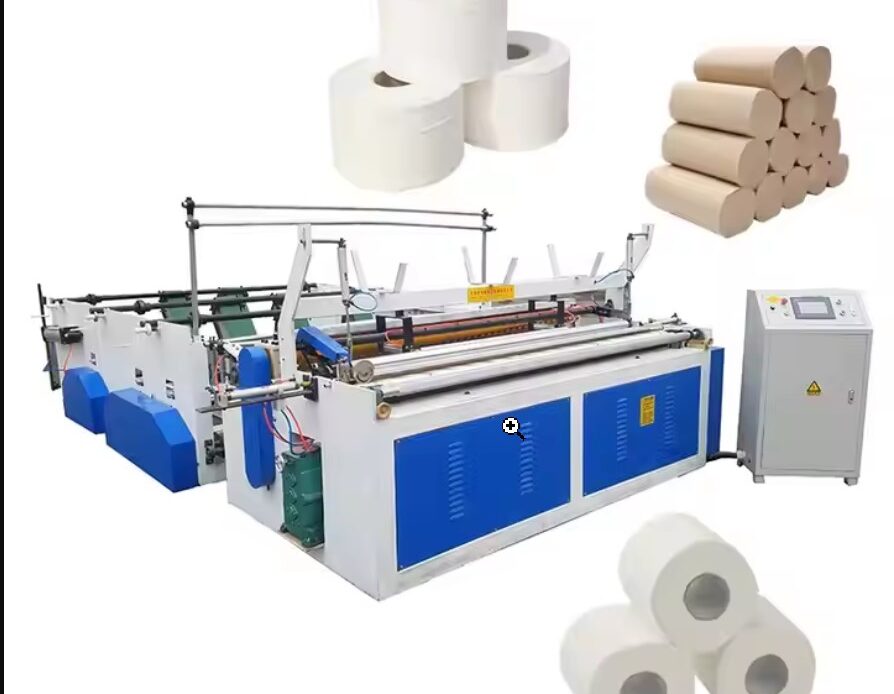
Health and Hygiene Product Plants
The health and hygiene sector is crucial for daily well-being, focusing on products designed to maintain cleanliness, comfort, and health. The production of products like tissue paper, sanitary napkins, and baby diapers involves specialized manufacturing lines tailored for high standards of hygiene and quality. Below is a detailed summary of the plants related to each product.

1. Tissue Paper Making Line
- Overview: This plant is dedicated to producing tissue paper, commonly used for personal hygiene, cleaning, and household purposes.
- Process:
- Pulping: Raw materials, usually wood pulp or recycled paper, are mixed with water to form a slurry.
- Pressing: The slurry is pressed onto a wire mesh screen to remove excess water, creating a thin paper sheet.
- Drying: The wet tissue sheet is dried using heated rollers.
- Cutting and Packaging: The tissue paper is rolled into large rolls, cut into smaller sheets or rolls, and then packaged for sale (e.g., toilet paper, facial tissues, paper towels).
- Equipment Used: Pulping machines, tissue paper machines, drying rolls, slitting machines, and packaging units.
2. Sanitary Napkin Manufacturing Line
- Overview: This plant produces sanitary napkins (pads) used by women during menstruation for hygiene and comfort.
- Process:
- Material Preparation: The primary materials include non-woven fabric, absorbent cores (such as cellulose or SAP – Super Absorbent Polymer), and a breathable backsheet.
- Layering: Layers of the non-woven fabric are bonded together to form the top layer, followed by the absorbent core and backsheet.
- Shaping: The sanitary napkin is shaped into the final product size and form, often with wings or adhesive strips.
- Packaging: The napkins are individually wrapped and packaged into boxes or bags for retail.
- Equipment Used: Roll feeders, bonding machines, cutting machines, sealing machines, and packaging lines.

3. Baby Diaper Manufacturing Line
- Overview: This plant manufactures disposable baby diapers, essential for infant hygiene and comfort.
- Process:
- Material Preparation: Raw materials include nonwoven fabrics, absorbent polymers (SAP), fluff pulp, elastic bands, and adhesive tapes.
- Core Formation: Absorbent fluff pulp and SAP are mixed and spread evenly to form the absorbent core.
- Layering: The absorbent core is sandwiched between layers of nonwoven fabric.
- Shaping: The diaper is shaped into the required size with elastic bands to fit snugly around the baby.
- Cutting and Packaging: The diapers are cut into individual pieces, folded, and packed in bags or boxes.
- Equipment Used: Material feeders, forming machines, elastic attaching machines, cutting and folding machines, and packaging lines.
Summary of Health and Hygiene Products:
- Tissue Paper: Used for personal hygiene (toilet paper), facial tissues, and household cleaning (paper towels).
- Sanitary Napkins: Essential hygiene product for women during menstruation.
- Baby Diapers: Disposable diapers used to maintain the hygiene of infants.
Key Considerations:
- Hygiene Standards: The manufacturing of these products is highly regulated to maintain sanitary conditions and prevent contamination.
- Absorbent Materials: Many of these products rely on absorbent materials like cellulose, SAP (Super Absorbent Polymer), and fluff pulp to effectively manage moisture.
- Automation: These production lines often utilize automation for high-speed manufacturing to meet demand and ensure consistency in product quality.