
A Chili Powder Plant is a specialized processing unit designed to convert whole dried chilies into fine, high-quality chili powder. Due to the increasing demand for spicy foods, ready-made masalas, and packaged spices, chili powder manufacturing has become a profitable and growing industry across Asia, Africa, and global export markets.
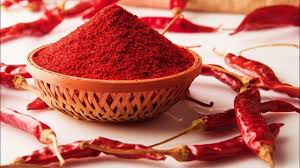
A modern chili powder plant focuses on cleaning, drying, grinding, and packaging under hygienic conditions to produce a consistent, vibrant red, and pungent product.
Raw Materials
The primary raw material is whole dried red chilies, commonly sourced from major growing regions. Popular varieties include:
- Byadgi / Kashmiri (for color)
- Teja / Guntur Sannam (for pungency)
- Bird’s Eye Chili
- Thai Chili
- Hybrid red chilies
Many manufacturers mix different varieties to balance color + heat + cost.
Process Flow of Chili Powder Plant
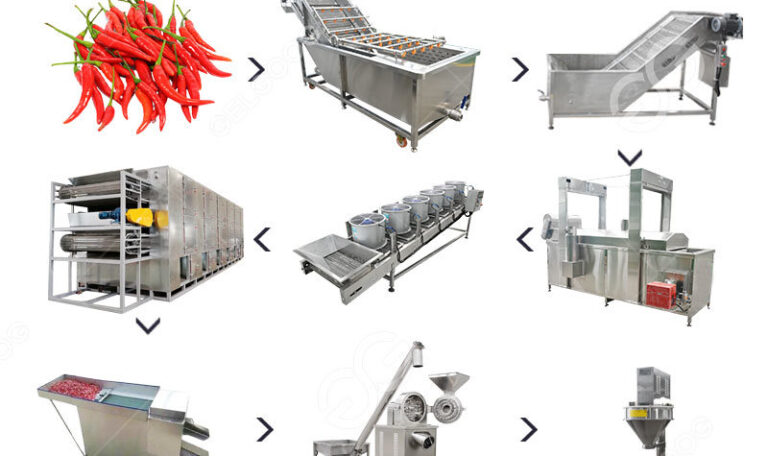
Step 1: Raw Chili Procurement
High-quality, fully matured, sun-dried chilies are selected with low moisture (below 12%) to ensure strong color and extended shelf life.
Step 2: Cleaning & Sorting
Foreign materials like:
- Dust
- Stalks
- Stones
- Metal particles
are removed using:
- Vibrating sieves
- Destoners
- Magnetic separators
- Air blowers
This step ensures purity and contamination-free product.
Step 3: Drying
Chilies are dried using:
- Sun drying, or
- Mechanical dryers (hot-air tray dryers, continuous belt dryers)
Purpose of drying:
- Reduce moisture to 8–10%
- Enhance grindability
- Prevent mold growth
Step 4: De-seeding (Optional)
Some plants remove seeds to produce:
- Low-heat, high-color chili powder
- Premium chili powder or paprika
De-seeding machines separate skin and seeds.
Step 5: Grinding
This is the heart of the plant.
Grinding machines used:
- Pulverizer (Hammer Mill)
- Impact Pulverizer
- ACM (Air Classifier Mill) for super-fine powder
Key points:
- Maintain low temperature to preserve color
- Fine mesh control (40–80 mesh)
- Premium plants use nitrogen cooling to avoid color loss
Step 6: Blending
Chili powder from different varieties or batches is blended in ribbon mixers to achieve consistent:
- Color shade
- Pungency level
- Aroma
Step 7: Sieving
A vibro-sifter is used to remove coarse particles and ensure uniform fineness.
Step 8: Packaging
The finished chili powder is packed in:
- Laminated pouches
- PET jars
- HDPE bags
- Bulk bags for exporters
Packaging must protect against:
- Moisture
- Light
- Contamination
Some plants use nitrogen-flushed packs to retain color.
Machinery Required for Chili Powder Plant
A standard processing line includes:
- Vibratory Cleaner / Pre-Cleaner
- Destoner
- Dryer (Sun or Mechanical)
- De-seeding Machine (optional)
- Hammer Mill / Pulverizer
- Air Classifier Mill (for fine powder)
- Ribbon Blender / Mixer
- Vibro Sifter
- Magnetic Separator
- Packaging Machine (Automatic FFS / Semi-auto)
- Weighing & Sealing machine
Plant Layout (General Flow)
Raw Chili → Cleaning → Drying → De-seeding → Grinding → Blending → Sieving → Packaging → Storage → Dispatch
Capacity Options
Typical commercial chili powder plants include:
- 100 kg/hr (Small scale)
- 250 kg/hr (Medium scale)
- 500 kg/hr (Large scale)
- 1 ton/hr (Industrial scale)
Quality Control Parameters
Plants must maintain:
- Moisture content (8–10%)
- ASTA Color value
- Scoville heat units (SHU)
- Particle size
- Microbial safety
- No artificial colors
Market Potential
The chili powder industry is rapidly growing due to:
- Increasing demand for packaged spices
- Rising consumption of fast foods and ready-to-eat meals
- Export opportunities for high-color powders
- Expansion of food processing industries
Chili powder is one of the highest-selling spices globally.
Benefits of a Chili Powder Manufacturing Plant
- Low investment, high returns
- Strong export potential
- Continuous demand throughout the year
- Easy availability of raw materials
- Scalable from small to large production
A chili powder plant is a highly profitable and stable food-processing business. With proper machinery, hygienic production, and quality control, manufacturers can produce premium chili powder suitable for domestic and global markets. Its consistent demand and long shelf life make it an ideal project for entrepreneurs and spice processors.