
PET Raw Materials:
Polyethylene terephthalate (PET) is a widely used thermoplastic polymer in the packaging, textile, and beverage industries. It is best known for its use in bottles, containers, films, and fibers. The raw materials used to produce PET are critical in determining the quality, strength, and clarity of the final product.
PET is valued for its lightweight nature, chemical resistance, recyclability, and transparency, making it a key material in modern manufacturing and packaging.
Chemical Structure of PET
PET is a polyester formed through polycondensation of terephthalic acid (or its dimethyl ester) and ethylene glycol:
n” HO-CH₂CH₂-OH”+n” HOOC-C₆H₄-COOH”→[-O-CH_2 CH_2-O-CO-C_6 H_4-CO-]_n+n” ” H_2 O
Terephthalic Acid (PTA) or Dimethyl Terephthalate (DMT): Provides the aromatic ring structure, contributing to rigidity, thermal stability, and clarity.
Ethylene Glycol (EG): A diol that contributes flexibility, crystallinity, and impact resistance.
Primary Raw Materials
1. Terephthalic Acid (PTA)
Source: Produced from paraxylene derived from petroleum.
Form: White crystalline powder.
Function: Provides the aromatic backbone of PET and determines the polymer’s thermal and mechanical properties.
2. Dimethyl Terephthalate (DMT)
Source: Derived from PTA and methanol.
Form: White crystalline or granular solid.
Function: Used as an alternative to PTA in some polymerization processes.
Often preferred for melt polymerization in certain production plants.
3. Ethylene Glycol (EG)
Source: Derived from ethylene, a petroleum product.
Form: Clear, colorless, viscous liquid.
Function: Acts as a diol, contributing flexibility, viscosity control, and processability in PET synthesis.
4. Catalysts and Additives
Catalysts: Such as antimony trioxide (Sb₂O₃), titanium, or germanium compounds accelerate polycondensation.
Additives:
Colorants: Provide colored PET bottles or containers.
UV stabilizers: Prevent degradation by sunlight.
Nucleating agents: Improve crystallization during thermoforming.
Recycled PET (rPET): Used to enhance sustainability and reduce raw material cost.
Production Process of PET
Esterification or Transesterification:
PTA reacts with EG (esterification) or DMT reacts with EG (transesterification) to form bis(hydroxyethyl) terephthalate (BHET) monomer.
Polycondensation:
BHET is heated under vacuum with catalysts to form high molecular weight PET polymer.
Water or methanol is removed as a by-product.
Solid-State Polymerization (SSP):
Enhances molecular weight and mechanical properties for bottle-grade PET.
Pelletizing:
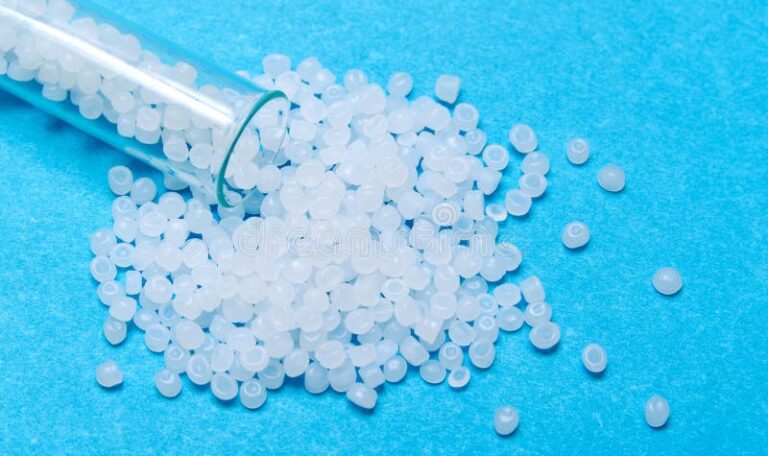
PET is extruded into pellets for storage, transportation, and further processing into bottles, films, or fibers.
Applications of PET
Packaging Industry
Soft drink, water, and juice bottles.
Food containers, trays, and thermoformed packaging.
Films for laminates and blister packs.
Textile Industry
Production of polyester fibers for clothing, carpets, and industrial fabrics.
Industrial Applications
Strapping tapes, molded components, and insulation materials.
Recycling and Sustainability
PET is 100% recyclable, and recycled PET (rPET) is used to produce new bottles, fibers, and packaging materials.
Advantages of PET
Lightweight and strong: Reduces transportation cost and handling issues.
Chemically resistant: Suitable for beverages and acidic liquids.
Clarity and gloss: Ideal for premium packaging.
Thermal stability: Can be heat-formed into bottles, sheets, and films.
Environmentally friendly: Recyclable, reduces petroleum use when rPET is used.
Environmental Considerations
Raw material sourcing from petroleum requires careful environmental management.
Emphasis on recycling PET reduces waste and energy consumption.
Adoption of bio-based ethylene glycol from renewable sources is emerging as a sustainable alternative.
Proper disposal and recycling prevent microplastic pollution.
PET raw materials, including terephthalic acid, dimethyl terephthalate, and ethylene glycol, form the foundation for one of the most versatile polymers in the world. With applications spanning packaging, textiles, and industrial products, PET remains indispensable in modern manufacturing.
Through advanced polymerization techniques, additive incorporation, and recycling, PET production continues to evolve toward higher efficiency, sustainability, and environmental responsibility, making it a key material for the future.